

What is DMIT?
(Dermatoglyphics Multiple Intelligence Test)
Map your Brain & Unleash your Hidden Potential
DMIT stands for Dermatoglyphics Multiple Intelligence Test. It is a scientific study associated with Fingerprint Patterns and Brain Lobes. It helps in understanding our Inborn Potential and Personality. DMIT (Dermatoglyphics Multiple Intelligence) has been developed by scientist Dr. Howard Gardner, Father of Multiple Intelligence & Medical experts & Scientists from renowned Universities all over the World. DMIT Analysis is based on Neuroscience & Multiple Intelligence Theory & Research & Understanding from the Field of Neuroscience, Genetics, Dermatoglyphics, Psychology, Anthropology and Embryology.
Traditionally IQ Test is used as a measuring tool to understand the degree of one’s Intelligence. Now Dermatoglyphics Multiple Intelligence Test is used in Corporates by HR & Educational Institutions like Schools & Colleges for Career Guidance. Know your Strength and weakness through the DMIT Report based on Dermatoglyphics and brain analysis. Our fingerprints help us in understanding ourselves better and transforming our lives through a Holistic approach.





DMIT Report Highlights
- Brain Lobe Connection & TFRC Distribution Map
- Inborn Potential & Communication Style
- Personality & Behavior Type (DISC Profile)
- Learning Style (VAK)
- Multiple Quotient Distribution Chart (IQ, EQ, AQ, CQ)
- Multiple Intelligence Distribution Chart
- Relationship Compatibility
- SWOT Analysis
- Career Selection
- Inborn Work – Management style
Avada Classic has been the Largest Global Software Company for more than 6 years, making it the most trusted corporation in the world.
DMIT Analysis & Brain Lobes connection
Brain Lobes & Multiple Intelligence
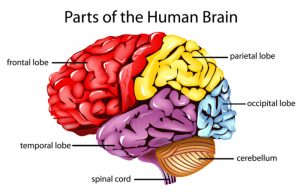
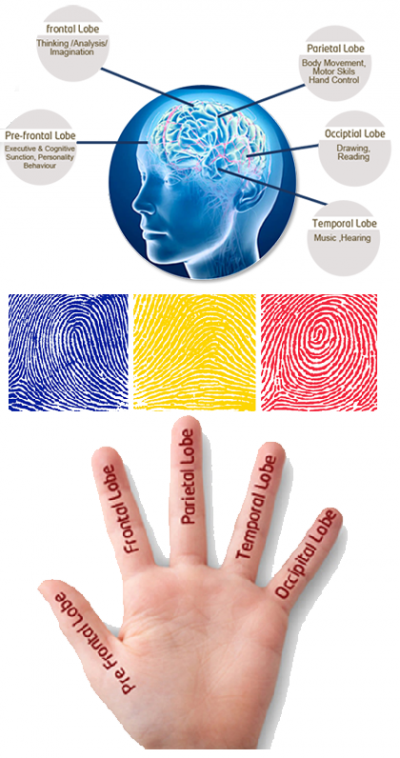
Our brain is divided into two hemispheres, Left and Right. Each hemisphere of the brain has its own strengths. Fingers of Right Hand represent the functions of the Left Brain and fingers of Left Hand represent the functions of the Right Brain. Each fingers reflect different Functions & Intelligences. Each intelligence has its own weight-age. Total distribution of intelligence’ percentage will be 100%.
The brain has amazing adaptive characteristics, it can train and fine-tune existing capabilities. Though we produce no new nerve cells after the time of birth, nurturing and training can help our 100 billion nerve cells in our cerebral cortex to be creative about wiring incredibly complex circuits. Through learning mechanism, the brain continues to rewrite and change its circuitry throughout our lives.
Brain Lobes Functions
LEFT BRAIN
Pre Frontal Lobe Function
Organization & Management Ability:
Planning, Judgment, Reasoning, Problem Solving, Logical Thinking, Self-reflection, Rational Thinking, Management & Organization Ability, Decision Making, Impulse Control.
Frontal Lobe Function
Logical Analysis Ability:
Logic, Reasoning, Analytical Ability, Numerical Concepts, Computation Analysis, Conceptual Understanding.
Parietal Lobe Function
Fine Motor Skills
Manual Dexterity, Control of Small Muscles (like fingers) Action Sequencing & Understanding Left-Right Direction & Mirror Movement.
Temporal Lobe Function
Language/Listening Ability
Decoding of Speech Sounds, Comprehension of Speech & Meaning, Verbal Memory Processes, Language Understanding, Hearing, Short Term Memory & Sound Identification.
Occipital Lobe Function
Observation/Reading Ability:
Visual Identification, Reading Ability, Observation of Object’s Existence, Distance, Spatial, Speed, Classification, Identification.
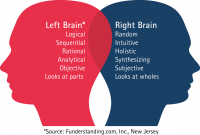
RIGHT BRAIN
Pre Frontal Lobe Function
Creativity & Interpersonal Ability
Leadership Behavior, Interpersonal Relationship, Creative Thinking, Emotional Functions, Objective Driven Action, Goal Setting, Intuition, Integration of Information, Spontaneity, Socialized Personality.
Frontal lobe Function
Visual – Spatial & Imagination Ability
Imagination, Abstract Thinking, Art, Concept, Image Visualization, 3D.
Parietal Lobe Function
Gross Motor Skills
Movement & Muscle Coordination. Feeling of Body in Space, Coordination & Rhythmic Movement, Integration of sensory information.
Temporal Lobe Function
Musical & Emotion Feeling Ability
Hearing of Sound Ability to Perceive Sound, Tones, Melody in Music, Feel of Emotion & Emotional Response.
Occipital Lobe Function
Visual Ability
Perception of Pictures & Visual Sensory Information, Image Appreciation, Visual Recognition of Shapes & Colors and Aesthetic Sense.
Avada Classic has been the Largest Global Software Company for more than 6 years, making it the most trusted corporation in the world.
Theory of Multiple Intelligence
When we hear the word intelligence, the concept of IQ testing may immediately come to our mind. Intelligence is often defined as our intellectual potential, something we are born with, something that can be measured, and a capacity that is difficult to change. Traditionally IQ Test is used as a measuring tool to understand the degree of one’s Intelligence. IQ Test analyses one’s aptitude with regards to Logic, Reasoning & Analytical Skills but does not tell about any other intelligences. As per MI theory each individual has Nine Multiple Intelligence although the proportion may wary. This theory suggests that traditional psychometric views of intelligence are too limited. Learning more about the multiple intelligences can help you understand yourself better.
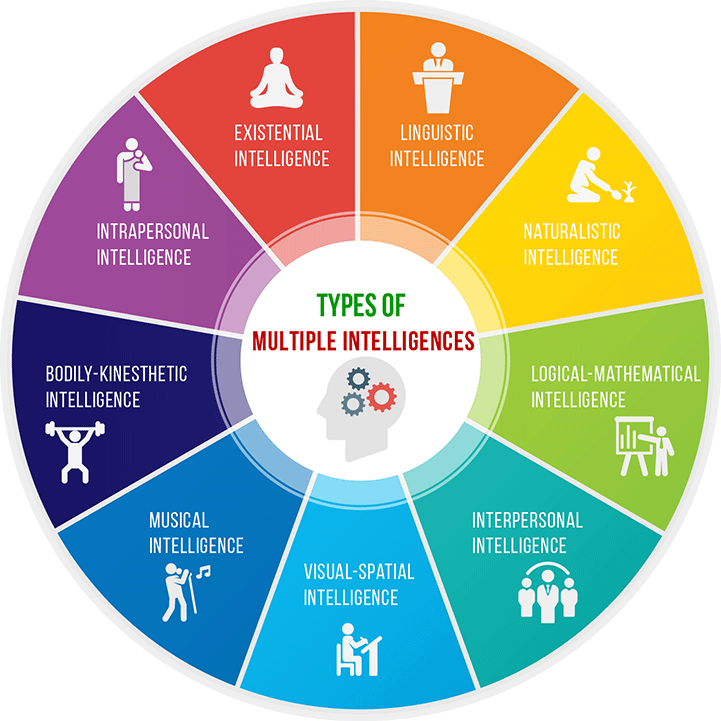
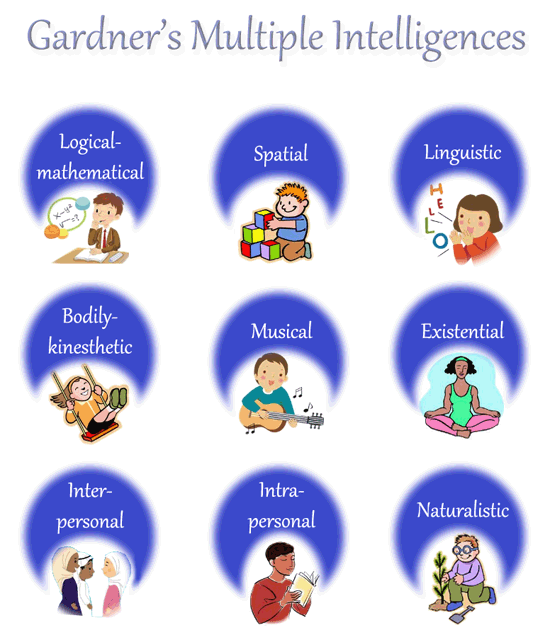
Types of Multiple Intelligence
-
Logical-Mathematical Intelligence – Number Smart
-
Linguistic Intelligence – Word Smart
-
Intrapersonal Intelligence – Self Smart
-
Interpersonal Intelligence – People Smart
-
Musical Intelligence – Musical Smart
-
Spatial Intelligence – Picture Smart
-
Naturalist Intelligence – Nature Smart
-
Kinesthetic Intelligence – Body Smart
-
Existential Intelligence – Phil Smart
Map Your Brain And Unleash Your Hidden Potential
Lorem ipsum dolor sit amet, consectetur adipiscing elit. Aenean eu ornare ante. Proin aliquam odio id lorem finibus, a ullamcorper arcu posuere.
Fingerprints and Brain Connection
Fingerprints are formed at the same time as the Brain’s Neocortex, which controls Emotions and Cognitive abilities such as Concentration, Memorization, Behaviour or Managing Problems or Handling Situations etc., which is clearly related to Psychological development.
Fingerprints can reveal a whole lot of things about a person, like their Intelligence, Personality and Talents, to name a few. Dermatoglyphics is a branch of science that is dedicated to the study of the mount, the ridges, and the lines that form your fingerprints.
Fingerprints are the tiny ridges, whorls and valley patterns on the tip of each finger. They form from pressure on a baby’s tiny, developing fingers in the womb. Fingerprints are made of an arrangement of ridges, called friction ridges. Each ridge contains pores, which are attached to sweat glands under the skin.
There is a close association between the Brain Lobes development & formation of Fingerprints. Fingerprints develops in mother’s womb during the 13th to 19th week of pregnancy. It’s completely formed by 24th week. Researchers have established the congenital link between fingerprint patterns and Brain lobes. Finger print does not change and remains the same throughout the Life.
Fingerprints and Brain Lobes
- Fingerprint represents human brain.
- Brain Lobes can be analyzed on the basis of formation of ridge present on the finger prints.
- Fingerprint development depends on proportion & distribution of brain lobes.
- Medical science confirmed that each person’s finger prints are unique.
- Identical twins too have different fingerprints & characteristics.
- Fingerprints demonstrate different types of characteristics.
- Each Finger represents different functions of Brain.
- No Fingerprints No Brain.
- National Forensic Science Technology Center states that, “No two people have ever been found to have the same fingerprints — including Identical Twins.” Also, it’s important to keep in mind that fingerprints also vary between your own fingers — this means you have a unique print on each finger.


History of Dermatoglyphics
Chairman, Department Of Anatomy, Harvard University,1933 – 1960.
Chairman, Department Of Microscopic Anatomy, Harvard University,1933 – 1945.
In 1943,Dr Cummins Published his book, Finger Prints, Palms & Soles (An Introduction to Dermatoglyphics) a Bible in the field of Dermatoglyphics.
Dr Harold Cummins is Considered as Father Of Dermatoglyphics.
- The research on Dermatoglyphics is more than 400 yrs. old.
- Dermatoglyphics was invented by Dr.Harold Cummins & is acknowledged as Father of Dermatoglyphics.
- He studied almost all aspects of fingerprints analysis.
- Dermatoglyphics was used to find Genetic disease with the help of fingerprint patterns
- Dermatoglyphics was earlier used by Russia to find skilled sportsmen for the Olympics Games in the 1970s.
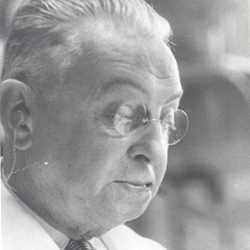
Father of Dermatoglyphics
Dr Harold Cummins – PH.D (1893 – 1976)
History of Multiple Intelligence
Howard Gardner is the John H. and Elisabeth A. Hobbs Research Professor of Cognition and Education at the Harvard Graduate School of Education.
He is also an adjunct professor of psychology at Harvard University.
Senior director of Harvard University’s Project Zero.
In 1983, Psychologist Dr Howard Gardner, Professor from Harvard University, in his book Frames of Mind introduced the Theory of Multiple Intelligences
- Dr Howard Gardner invented Multiple Intelligence in 1983.
- There are 9 Multiple Intelligence’s
- Each individual is Born with 9 Multiple Intelligence, although the proportion may vary.
- Multiple Intelligence Theory is a solution for Educational & Psychological problems.
Reasoning Behind Gardner M.I Theory
- Instructional programs should focus on identifying different types of intelligence.
- Individuals should be persuaded to use their own preferred intelligence on learning.
- Assessment for learning should evaluate multiple types of intelligence
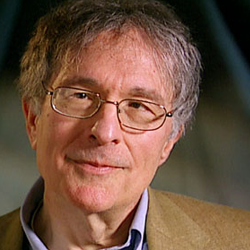
Father of Multiple Intelligence
Dr Howard Gardner – PH.D, ( 1943 – Till dt)